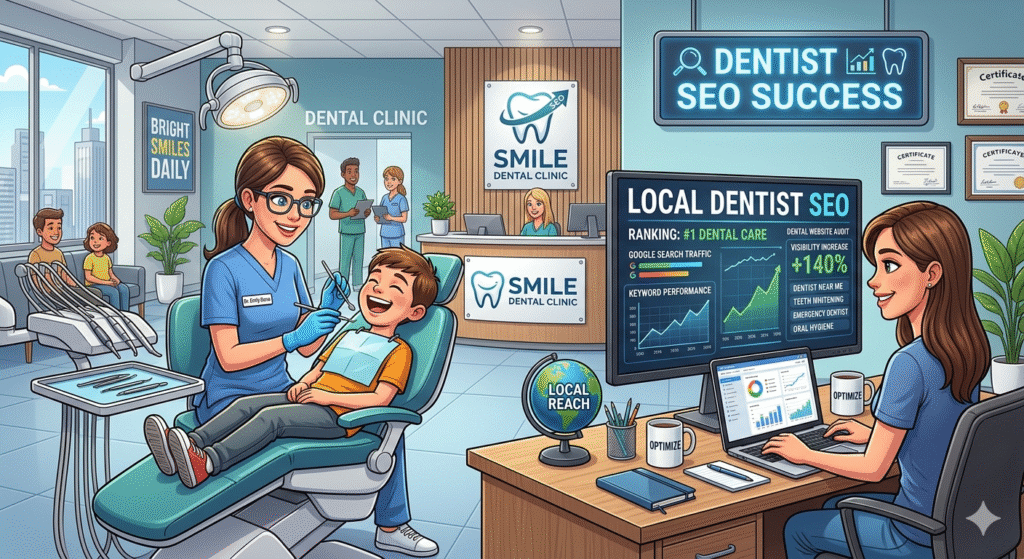
Dental Website SEO Checklist for 2025
Table of Contents
In today’s digital-first world, a dental practice’s website is often the first interaction patients have with your clinic. If your website is slow, outdated, or buried deep in search results, chances are potential patients will book an appointment with a competitor instead. This is where dental website SEO becomes critical. A well-optimized site not only improves your online visibility but also helps you convert website visitors into loyal patients.
As we move into 2025, search engines are smarter, user expectations are higher, and the competition among dental practices is more intense than ever. To stay ahead, dentists need a clear and structured approach to SEO. This checklist will walk you through the key strategies every practice should follow to improve dentist website optimization, site speed, and on-page elements.
Why Dental Website SEO Matters in 2025?
Patients rarely flip through directories or rely solely on word-of-mouth anymore. Instead, they search online for services like “dentist near me” or “cosmetic dentistry in [city].” If your practice isn’t showing up on page one, you’re missing out on a massive pool of potential patients.
Dental website SEO ensures:
- Higher visibility in Google search results.
- Increased credibility as a trusted dental provider.
- More qualified leads and appointment bookings.
- Better user experience, which keeps patients engaged.
Now, let’s break down the SEO checklist for dental websites in 2025.
1. Optimize Your Website for Speed
Website speed is a make-or-break factor in SEO. Patients don’t want to wait for a site to load, and search engines penalize slow websites.
Key actions for dental site speed:
- Compress and resize large images, especially before-and-after photos.
- Use a lightweight website theme that isn’t bogged down by unnecessary code.
- Enable browser caching and a Content Delivery Network (CDN).
- Test your site regularly with tools like Google PageSpeed Insights or GTmetrix.
Even a one-second delay in loading can cause potential patients to leave your site, so this should be one of your top priorities.
2. Mobile-First Design
Most patients search for dental services using their smartphones. If your website doesn’t display properly on mobile, you risk losing new patients.
Checklist for mobile optimization:
- Ensure a responsive design that adapts to all devices.
- Keep navigation simple with easy-to-tap menus.
- Use clear call-to-action buttons like “Book Appointment” or “Call Now.”
- Avoid pop-ups that disrupt the mobile user experience.
Google’s mobile-first indexing also prioritizes mobile versions of websites, so mobile usability directly impacts rankings.
3. On-Page SEO Essentials
Dental on-page SEO is the foundation of optimization. It involves structuring your site content and code in a way that search engines and users can easily understand.
Core elements include:
- Title tags: Add location-based keywords like “Family Dentist in Chicago.”
- Meta descriptions: Write compelling summaries that encourage clicks.
- Header tags (H1, H2, H3): Organize content for readability.
- Alt text for images: Describe dental images and services accurately.
- Internal links: Connect blogs, service pages, and appointment booking pages.
By carefully optimizing each page, you improve both search visibility and patient engagement.
4. Content That Answers Patient Questions
Patients often search for answers before booking an appointment. Content is your opportunity to provide those answers and build trust.
Effective dental content ideas:
- Blogs about procedures like teeth whitening, implants, or braces.
- FAQ sections answer common patient concerns.
- Case studies or patient testimonials.
- Educational guides about oral health.
Content should be written in a conversational and empathetic tone—think of it as speaking directly to a nervous patient sitting in your waiting room.
5. Local SEO for Dentists
Most patients want a dentist close to home. That’s why local SEO is crucial.
Steps for local optimization:
- Claim and optimize your Google Business Profile.
- Ensure consistent NAP (Name, Address, Phone number) across directories.
- Encourage patient reviews on Google and respond to them.
- Use location-specific landing pages for services in each city or neighborhood.
Showing up in the Google Map Pack can bring in a steady flow of new patients who are ready to book.
6. Site Security and Technical SEO
Trust is essential in healthcare. Patients expect your website to be secure and reliable.
Checklist for technical SEO:
- Install an SSL certificate (your site should load as HTTPS).
- Fix broken links and redirects.
- Use a clean URL structure (example: /services/dental-implants).
- Submit an XML sitemap to Google Search Console.
- Regularly monitor site health with tools like Screaming Frog or SEMrush.
A technically sound website builds both patient trust and search engine credibility.
7. Schema Markup for Dentists
Schema markup is structured data that helps search engines understand your practice better. It can enhance your listings with rich snippets such as star ratings, FAQs, and service details.
For example, if your site uses schema markup for “dentist near me,” Google might display your practice hours, reviews, and contact info directly in the search results—making it easier for patients to choose you over competitors.
8. Conversion-Focused Design
SEO gets patients to your website, but design convinces them to book. Your website should guide visitors smoothly toward taking action.
Best practices:
- Prominent call-to-action buttons (“Schedule Now” or “Call Us Today”).
- Clear service pages with before-and-after visuals.
- Live chat or AI-free virtual assistant options for inquiries.
- Easy-to-use appointment forms.
By combining great SEO with smart design, you turn clicks into actual patients.
9. Continuous Monitoring and Updates
SEO is not a one-time project. The digital landscape evolves, and dental practices must adapt.
Ongoing tasks include:
- Tracking keyword performance and rankings.
- Analyzing website traffic through Google Analytics.
- Updating content to reflect new treatments or technologies.
- Refreshing old blogs with current information.
- Monitoring competitor strategies to stay competitive.
Regular improvements ensure your site doesn’t lose visibility over time.
10. Preparing for AI and Voice Search in 2025
As patients increasingly use smart devices and voice assistants, optimizing for conversational queries is important. Phrases like “Who is the best dentist near me?” or “Where can I get emergency dental care tonight?” should be incorporated into your content.
To stay ahead, create FAQ-style pages and use natural, human-friendly language that mirrors how people actually speak.
Conclusion
A dental website isn’t just a digital business card; it’s the gateway to patient trust and growth. By following this dental website SEO checklist for 2025, your practice can improve visibility, attract more qualified leads, and convert website visitors into lifelong patients.
From dentist website optimization and dental site speed improvements to on-page SEO and local visibility, every detail counts. The practices that invest in strong digital foundations today will thrive in the increasingly competitive dental market tomorrow.
FAQs
1. How often should I update my dental website for SEO?
At least every quarter. Regular updates signal to search engines that your site is active and relevant.
2. What’s the most important factor in dental website SEO?
User experience. A fast, mobile-friendly, and easy-to-navigate site will always perform better.
3. Can a small dental practice compete with larger clinics using SEO?
Yes. By targeting local keywords and focusing on quality content, small practices can rank well and attract nearby patients.
4. How long does it take to see results from dental website SEO?
Typically, 3–6 months, depending on competition and the quality of your optimization efforts.
5. Do reviews impact dental SEO?
Absolutely. Positive reviews improve local rankings and build patient trust.